Coordination des Associations et des Particuliers
pour la Liberté de Conscience
(CAP Freedom of Conscience)
 NGO with ECOSOC consultative status at the United Nations
Registration on EU Transparency Register 628479527756-78
Civil society platform of Fundamental Rights created by the EU FRA
French non-benefit association register : W751082307
Member : European Federation for Freedom Of Belief – FOB
Member : Conference of Non-Governmental Organizations in Consultative Relationship with the United Nations – ConGo
Advisory Board : International Council for Diplomacy and Dialogue
Advisory committee : New Generation Uniting Nations
2024 Friends of Falun Gong Human Rights Award
DAFOH Partners in Combating and Preventing Forced Organ Harvesting
Contact : contact@coordiap.com
phone : +336 70 66 04 42
CAP Liberté de Conscience – 117, rue de Charenton – 75012 – France
What is “Coordination des Associations et des Particuliers pour la Liberté de Conscience” (CAP Freedom of Conscience)?
CAP Freedom of Conscience is a secular European NGO with United Nations Consultative Status, created in 1995 and dedicated to protect the Right of Freedom of Religion and Belief.
CAP Freedom of Conscience combats all forms of discrimination based on religion or belief by alerting European and International bodies.
CAP Freedom of Conscience collects testimonies of discrimination and human rights violations affecting religious or belief communities in order to disseminate them to international bodies, and in order to raise awareness and inform them as well as to generate debate on the protection of Freedom of Religion and Belief.
CAP Freedom of Conscience also advocates for any religious or spiritual group facing discrimination to have their right to Freedom of Religion and Belief recognized.
CAP Freedom of Conscience is a member of the European Federation for Freedom of Belief (FOB), European Network Of Religion and Belief (ENORB) and participate to the Civil Society Platform of Fundamental Rights created by the EU Fundamental Rights Agency.
CAP LC General Assembly report 2021
CAP FREEDOM OF CONSCIENCE SUPPORT :
FoRB Roundtable Brussels-EU
https://www.forbroundtable.org/
The FoRB Roundtable Brussels-EU is an informal group of individuals from civil society who gather regularly to discuss FoRB issues on a non-attribution basis. It is simply a safe space where participants gather, speak freely in sharing ideas and information, and propose joint advocacy actions to address specific FoRB issues and problems globally.

Pakistan: Lahore Court Sentences Four Men to Death, Relying on Forensic Evidence With “Procedural Defects”
On 17 October 2026, Additional Sessions Judge Nusrat Ali Siddiqui Malik of Lahore convicted four men in a case brought by the Federal Investigation Agency (FIR No. C-104/22) and sentenced each of them to death under Section 295 C of the Pakistan Penal Code, with a fine of five hundred thousand rupees. The convicts, Muhammad Shoaib Sarwar, Arslan, Saqib Ali and Hassan Raza, were also sentenced under four additional provisions: seven years under Section 11 of the Prevention of Electronic Crimes Act 2016, ten years under Section 295 A, life imprisonment under Section 295 B, and three years under Section 298 A. They were arrested between May and September 2022 and remained in custody throughout a trial lasting over four years.
Investigation Finds Chinese Communist Party Control Extends Across China’s Organ Transplant System
NEW REPORT IDENTIFIES TRANSPLANT SURGEONS HOLDING SENIOR PARTY POSITIONS AND
QUESTIONS WHETHER CHINA’S CLAIMS OF REFORM CAN BE BELIEVED
The United Nations Draws a Line on Artificial Intelligence
More than sixty armed conflicts involving at least one State are being fought around the world today, a level not seen since the end of the Second World War. Into this troubled landscape, artificial intelligence has arrived not as a distant prospect but as a working tool: it sorts, targets, persuades and, in an increasing number of documented cases, it kills. On 6 October 2026, at the close of its sixty third session, the United Nations Human Rights Council adopted two resolutions addressing the human rights dimension of this transformation. Days later, in New York, the United Nations High Commissioner for Human Rights, Volker Türk, told the Third Committee of the General Assembly that the world had reached, in his words, the final level of red alert.
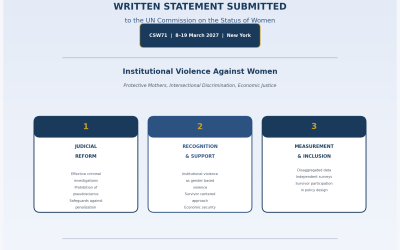
CAP LC Submits Written Statement to the UN Commission on the Status of Women for its 71st Session
CAP LC, a non-governmental organization in special consultative status with the United Nations Economic and Social Council, today submitted its written statement to the Secretariat of the Commission on the Status of Women. The statement was filed on the final day of the submission period for the Commission’s seventy first session, to be held from 8 to 19 March 2027 at United Nations Headquarters in New York.
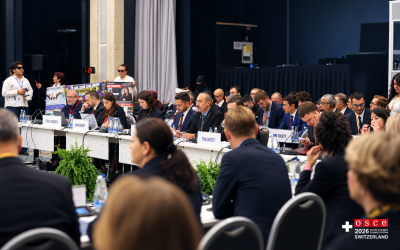
Latvia’s expulsion of historian Valery Engel: CAP LC takes the case to the OSCE Warsaw Human Dimension Conference
CAP Liberté de Conscience calls on the OSCE to examine the use of national security instruments to suppress academic freedom and independent scholarly opinion.
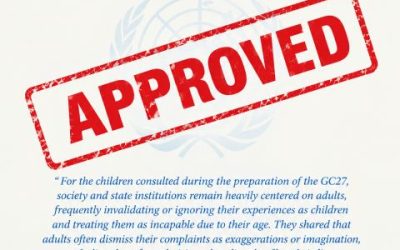
General Comment No. 27 on children’s access to justice adopted: the concerns we documented echo in the outcome of the consultation
In June 2025, we contributed to the public consultation on draft General Comment No. 27 of the United Nations Committee on the Rights of the Child. Our submission was prepared by Sarah Thierrée, Johnny Dousse and Marie Sablon, and signed by Sarah Thierrée. It focused on systemic failures observed in France that prevent children, in particular victims of intrafamily violence, from obtaining an effective remedy.